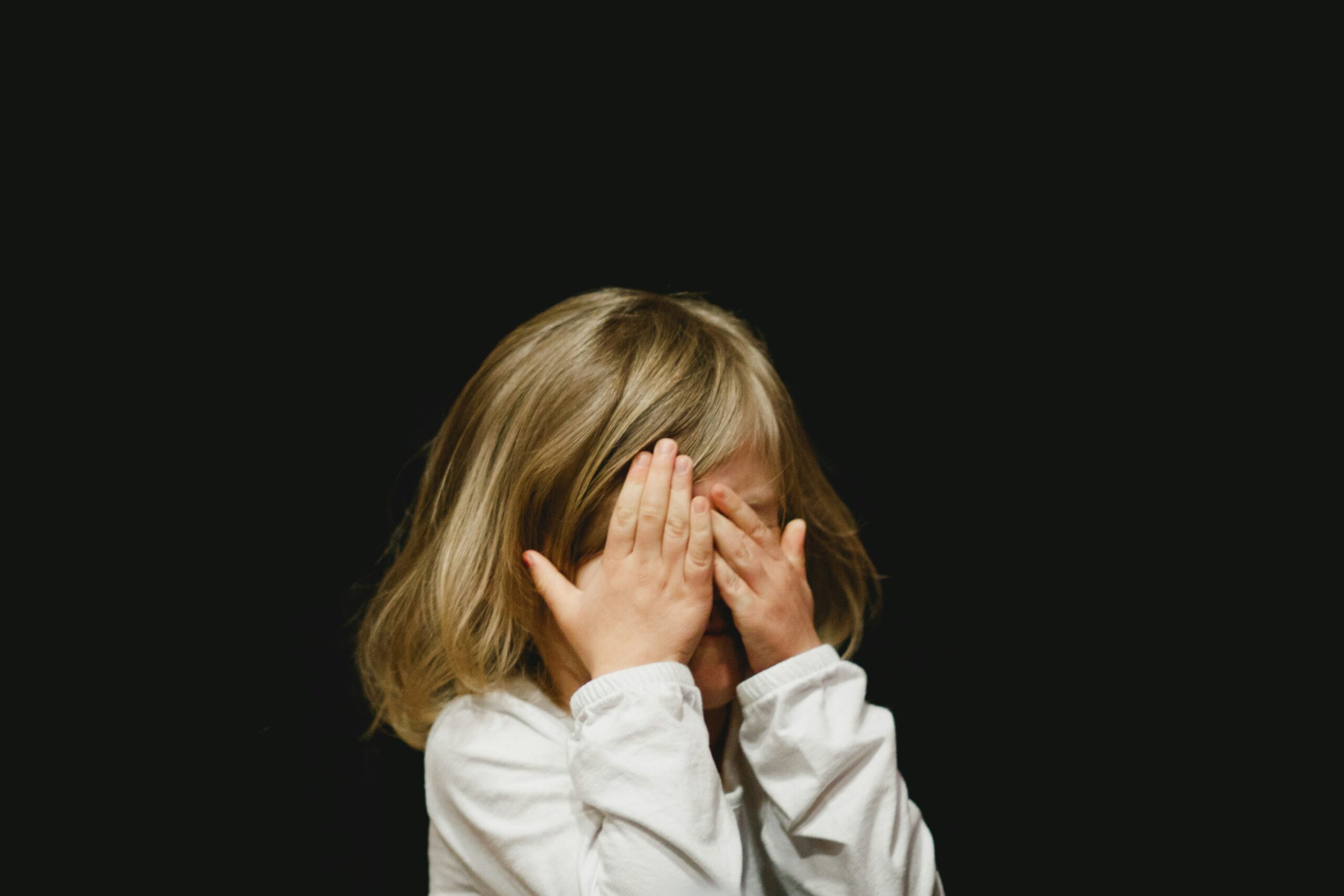
Have you ever seen small kids getting frightened or panicked when they see or hear something? Or when they go to a certain place, meet someone, go to a new place, or experience something bad? This is not very common in children. Many children get scared of a few things, but the trauma that they go through every time they experience something is not ok. This makes them scared; they become quiet, cry loudly, avoid those things or anything related to them completely, or always stay close to the person they love and trust. The same happened with my 3.5-year-old daughter a few months ago. This is the first time I experienced how trauma can affect children, what their symptoms are, and how to overcome it. Trauma is very different from fear. Fear is a natural emotion that occurs when a person faces an immediate threat or danger and usually fades when the danger passes. Trauma, however, is a deeper emotional and psychological response to a highly distressing or overwhelming experience. While fear is often temporary, trauma can have long-lasting effects on a person’s thoughts, feelings, and behavior, even after the event is over.
Earn upto 5.6% on Lenovo products
Like any other normal day, an airplane passed over our villa. It was an ordinary sound, one that most of us barely notice. But my three-year-old daughter stopped playing, looked up at the sky, and ran straight into my arms. Her little body stiffened with fear. For her, that sound is no longer ordinary. It carries the memory of last month’s terrifying missile sounds — a fear that has stayed with her long after the danger passed. And any other sound that resembles the sounds of those missiles makes her terrified. I know many parents have experienced this in their homes, so they may relate to me very easily. It’s not just about missile sounds; some kids are scared of car sounds, some are scared of thunder, some are scared of drilling, some are scared of truck horns, some are scared of animal sounds, and some are scared of complete silence, too. In this article, I will explain how my daughter overcame this fear of loud sounds and how we all helped her get normal again. After reading this article, you will also know how to overcome your kids’ fears and make them strong and confident again.
When Every Sound Feels Like Danger: –
There are moments in a child’s life that should never happen. Moments that arrive too suddenly, too loudly, and leave behind fear long after the sound has faded. Last month, my three-year-old daughter experienced a deeply distressing event: the terrifying sound of missiles in the sky. For adults, it was frightening enough. For a child, it was something far more profound — a moment that shattered her sense of safety. She was not scared from day one of the missile sounds or the alarm sounds that came on our phones. The fear gradually increased as the days passed by. At first, I also did not understand how, because initially when she heard the sounds, she reacted normally and didn’t get frightened at all. After one week of those sounds and war, she slowly started telling me, “A bomb is coming“, in a panicking voice. And when I went to the balcony for some work, she told me to come back inside and close all the balcony and window doors. Since that day, our world has changed in ways both visible and invisible. Now, every loud sound brings fear back to the surface. The rumble of an airplane passing overhead, the chopping sound of a helicopter above our villas, even sudden noises from outside can make her freeze, cling tightly to us, or look up at the sky with panic in her eyes. She stopped coming to the balcony and stayed away from windows and balcony doors. She didn’t even come into the room that has a balcony; she only stayed in the bedroom the whole day and looked outside the window. When we went out, she always wanted to travel in the car; she did not walk with us on the road. We have a park near our home. I always take my kids there in the evening for some outdoor activity. When the war began, my daughter refused to go to the park too. She was so frightened that she always stayed in the bedroom; she ate her food there, slept there, and if she wanted to go to the washroom, which is through the hall that has a balcony, she used to run to the bathroom and close the bathroom door. She never allowed me to turn off the AC in the rooms because when we turned off the AC, everything became silent and there was no sound at all, and my daughter was scared of that silence too. She thought that if there was so much silence, the bomb would sound very loud. What was once background noise has become a trigger for her.
After a few days, when the flights reopened, we planned to go to my parents’ home for a change in environment, as my son also got his Eid holidays, so that my daughter feels safe there and forgets this fear of bombs. So, we planned our journey and booked a flight. When we sat in the flight, my daughter again got scared of the plane sound and the takeoff sound. Now, for her, every loud sound or a slightly different sound makes her feel as if it is a bomb sound. Anyhow, we went to my parents’ home. After going there, another problem occurred. My parents’ house is very near the airport. So the flight sounds are very common in that area day and night. Since it was very close to the airport, the flight sounds were more common there than in our own home. Now every day, whenever a flight passed by our building, a huge sound came, just like a bomb, and my daughter started crying, thinking it was a bomb. This happened at least 2 to 3 times a day. And this was worse than our home. I thought it was a mistake to bring her here, as her fear increased even more now. But we didn’t have any other choice. So, I started comforting my daughter every time she heard a sound. I used to be near her all the time and take her in my arms when she got scared. I told her so many times that the sounds are of aeroplanes and military planes and there are no bombs here. I explained to her everything is safe here and nothing will happen to her. But she was not ready to listen at all. She stopped crying only when I lifted her in my arms and comforted her. She used to be in my arms for 15 minutes after the plane sound. Then, when she felt normal, she used to get down and play normally. But she had a constant fear even while playing. Any loud sound from the kitchen or while playing with toys, she used to run towards me. This went on for 20 days in my parents’ home. After 20 days, we came back to our home as my son’s school started reopening. But the war didn’t stop yet. Even after coming to our home on the first 2 days, we heard the missile sounds, and the phone alarms started ringing. And my son had online classes for the next 15 days due to the war. After those 2 days, we didn’t hear any more sounds. Life was slowly becoming normal. But my daughter still feared. She did not come in blacony to play and stayed in the bedroom. After two months, she slowly started coming and sitting in the hall, and then slowly came in the balcony to play. Slowly, her fear went away. Now, when she hears an airplane sound, she becomes quiet but doesn’t run away or cry. She listens carefully to the sound and looks into the sky. Now, when I turn off the AC, she doesn’t cry or force me to turn the AC on again. Because she has overcome her fear now, and yes, it took time, effort, and hard work for me and my daughter to overcome it.

As parents, one of the most painful things to witness is the transformation of ordinary life into a source of fear for your child. A passing aircraft is no longer just a sound in the sky. To her, it carries the memory of danger. This experience has taught me something many people underestimate: young children do not simply “forget” trauma because they are too young to understand it. In fact, they often feel it more deeply than elders. At three years old, children may not yet have the vocabulary to describe fear, anxiety, intrusive memories, or communicate properly. But their bodies remember. Their nervous systems remember. Trauma can live in the body long before it can be expressed in words. A sudden loud noise may instantly transport a child back to the moment they first felt unsafe.
Psychologists often describe this as the brain remaining on high alert after a frightening event. The child’s mind begins scanning constantly for signs of danger, even when no real threat is present. This is not irrational fear — it is the body’s natural survival response. For parents, this can be heartbreaking and exhausting. You want to reassure them, to explain that the sound is harmless, to make the fear disappear with a few comforting words. But healing from trauma, especially in young children, is rarely immediate. It requires patience, repetition, and above all, safety. I have learned that the most important thing is not to dismiss her fear, but to acknowledge it. When she hears a plane and becomes frightened, we gently say, “Did that sound scare you. But you are safe. It is only an airplane passing by.” Naming her fear helps her feel seen. Don’t try to divert your kid from that situation by making her do other things or giving her something interesting to play with. Instead, talk to her about the fear they have. Let them have a deep conversation about it. They will tell everything they feel about their fear when you sit and talk with them with a calm tone. Though they cannot explain in sentences or talk properly, their broken words are enough for you to understand them, and mothers are the best at understanding their kids from day 1. Reassurance helps rebuild trust in the world around her. Slowly, safety is restored through repeated moments of calm.

This experience has opened my eyes to how deeply conflict and violence affect children, even when they are physically protected at home. The sounds of war, unrest, or threat do not simply pass overhead; they can settle into a child’s emotional world in lasting ways. As adults, we may move on from the event. Children often cannot. Their healing depends on the adults around them creating spaces of security, emotional validation, and gentle consistency. No child should have to fear the sky. Yet for many children living through or near conflict, this fear becomes part of everyday life. As parents, our role is not to force bravery, but to help them feel safe enough to find it again on their own. Sometimes healing begins with something as simple as holding a small hand during the sound of an airplane and saying, once again, “You are safe.” Healing does not happen in one day. It happens in small moments — holding her hand when a plane passes overhead, reassuring her that she is safe, and helping her slowly trust the world again. Some wounds leave no visible scars. Sometimes, they live in the sounds a child cannot forget.
But I am really proud of the government here. They have demonstrated remarkable courage, preparedness, and leadership in responding to missile and drone threats during times of regional conflict. Faced with complex security challenges, the government has prioritized the safety and protection of its citizens, residents, and critical infrastructure. The armed forces and air defense systems have shown a high level of professionalism by detecting and intercepting incoming missiles and drones, helping to reduce potential harm and maintain public safety. Government authorities have also worked to keep the public informed through official updates and safety guidance during periods of heightened tension. The country’s response reflects a commitment to protecting its people while remaining calm and united during challenging circumstances. The bravery of the government is reflected not only in its defensive capabilities but also in its determination to safeguard national security, preserve stability, and uphold the well-being of everyone living in the country. This is the reason we all felt safe and did all our routine works everyday. Everything was working normally. The hospitals, shops, and offices were all open and working normally. Only the schools were closed due to the safety of children. Many people ran away to their home country during the war, but we stayed because we trusted the government and we were confident that they would make sure we were all safe in their country, though we are from another country. There is a reason why this country is called one of the safest countries in the world. This is not just a random saying; people feel it when they are here.
Discover more from MomLoom
Subscribe to get the latest posts sent to your email.