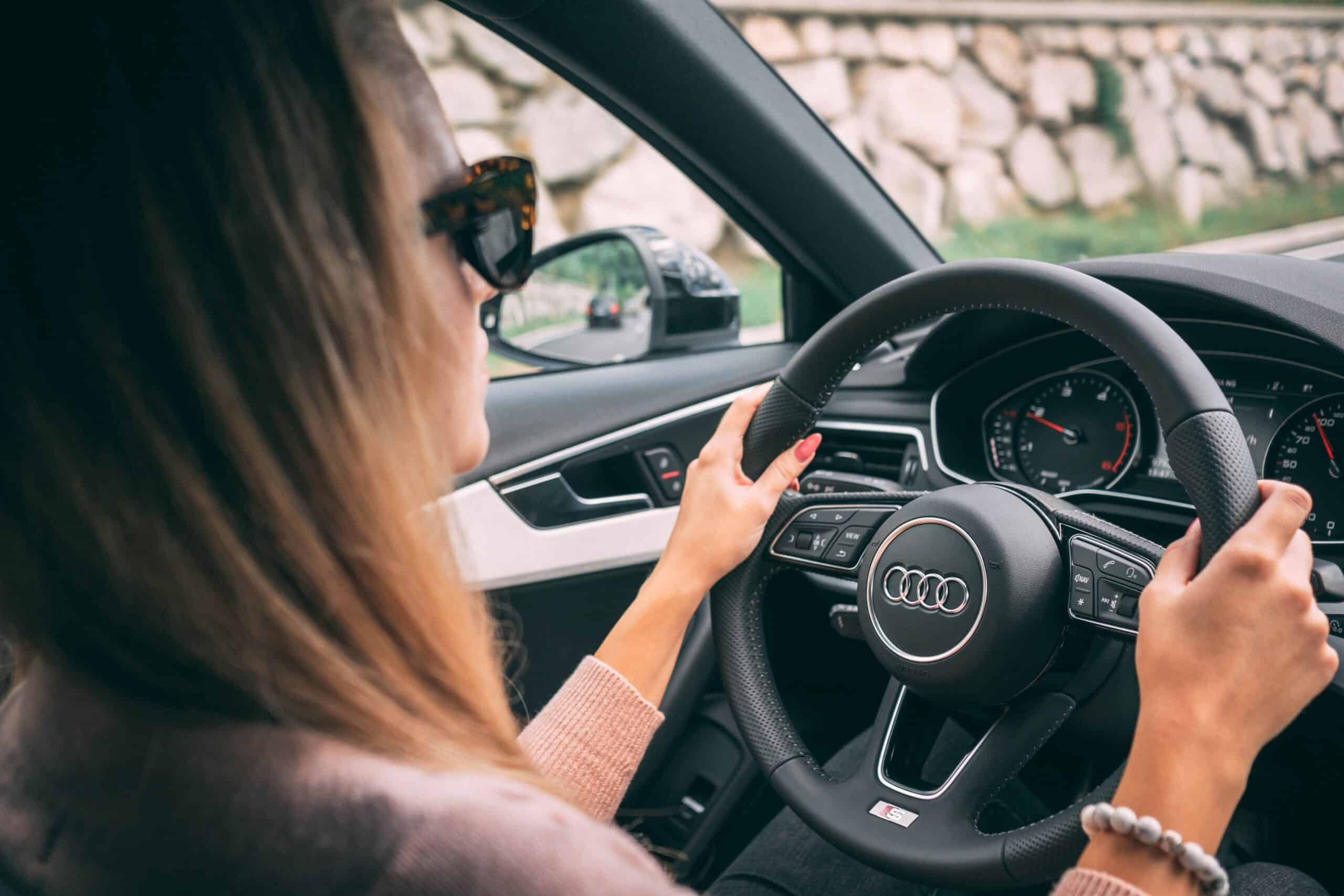
Getting a driving licence in Abu Dhabi was an important milestone for me. Learning to drive is not just about starting a car, pressing the accelerator, or turning the steering wheel. It is about understanding road rules, developing confidence, observing your surroundings, and making safe decisions. One of the most important stages of this journey was the final road test. The good news is that I passed my driving road test on my first attempt in Golden Chancet! Passing on my first try was a rewarding achievement for me, because we all know how tough it is to pass the driving test in Gulf countries, as the rules are very strict here. Any one small mistake and you will fail the test. This made me realise how important it is to take driving lessons seriously, practise consistently, and understand the skills required to become a responsible driver. In this blog, I want to share my experience and explain what learners should know and practice before taking the road test in Abu Dhabi.
Understanding the Driving Test Journey in Abu Dhabi
Before preparing for the final road test, you have to understand the general licensing journey. Depending on your eligibility, previous driving experience, and the applicable licensing pathway, the process may include:
- Opening a driving licence file.
- Completing the required eye test.
- Attending theory classes and learning UAE road rules.
- Passing the theory assessment.
- Completing practical driving lessons on the road.
- Completing the required internal assessments.
- Taking the final road test.
The exact process can differ depending on your circumstances, so it is always best to follow the instructions provided by your driving school and the relevant Abu Dhabi licensing authority. My advice is to understand the full process early. This helps you plan your lessons, prepare your documents, and avoid unnecessary last-minute stress. I have written a long article on getting a driving license in Abu Dhabi with all the steps, fees, tests, and time taken. Please read that article to understand more about the driving license process in Abu Dhabi.
What Should We Learn Before the Road Test?
This is probably the most important part for any learner. A road test is not simply about showing that you can move a vehicle. You need to demonstrate that you can control the car, observe the road, follow traffic rules, and respond safely to different situations. Driving is not as easy as it looks. You need so much practice on the road to become a confident driver. And this practise, needs patience and more time on the road. The more you practise, the more confident you become. And expect small mistakes to happen while driving. These mistakes make you more aware and confident. So don’t be scared that if you drive on the road, you will make mistakes. Because without mistakes, no one can become a perfect driver. So, the next time you make a mistake, don’t stop driving. You have to drive more to overcome the fear. Here are some of the main skills every learner should focus on.
1. Getting Comfortable With the Car

Before driving in traffic, you should know the basic controls of the vehicle. You should not need to search for basic controls while driving. Familiarity helps you keep your attention on the road. You should learn how to:
- Adjust the driver’s seat so you can reach the pedals comfortably.
- Adjust the rear-view and side mirrors.
- Fasten your seat belt and ensure passengers are properly secured.
- Understand the accelerator, brake, steering wheel, and parking brake.
- Identify the indicators, headlights, windscreen wipers, and hazard lights.
- Understand the gear selector and the vehicle’s basic dashboard warnings.
- Start the vehicle and move off safely.
- Stop smoothly and secure the car when parked.
2. Moving Off and Stopping Safely

Starting and stopping the car may sound simple, but they are fundamental driving skills. Avoid moving off or stopping the car just because the road looks clear at first glance. You have to check all your surroundings properly and make sure it is safe before you decide to stop the car or move out on the road. For this, you need to practise:
- Checking your surroundings before moving.
- Checking mirrors and blind spots when appropriate.
- Signalling left or right when necessary.
- Using the hazard lights when necessary.
- Releasing the parking brake correctly.
- Moving off smoothly without unnecessary acceleration.
- Maintaining control when stopping.
- Choosing a safe stopping position.
- Securing the vehicle properly when finishing your drive.
3. Steering and Lane Discipline

Good steering control helps you stay in your lane and respond smoothly to road conditions. During practice, ask your instructor to help you recognise your lane position and correct mistakes early. Remember, smooth, controlled driving is better than sudden movements. For early drivers, it may be a little difficult to control the steering or stay in the middle of the lane without moving your car left and right. When I started to drive, this was a serious mistake for me. I was not able to keep my car in the middle of the lane when I was driving on highways or above the speed of 80km/h. After learning and looking at others driving, I understood that while driivng we have to look as far as we can on the road to keep our car steady. If you look at the road very near to your car or your car bumper, your car may move from side to side as you think the car is going to the right or left, and you steer the wheel to the right or left. So, you should learn:
- How to maintain a stable position within your lane.
- How to steer smoothly through bends.
- How to avoid drifting between lanes.
- How to maintain a safe distance from lane markings.
- How to position your car correctly before turning.
- How to make turns without cutting corners or swinging unnecessarily wide.
4. Mirrors, Blind Spots, and Observation

Observation is one of the most important habits to develop. Learn the difference between checking mirrors and checking blind spots. Mirrors provide useful information, but they do not show everything around your car. You need to shoulder check before overtaking or moving from one lane to another. Observation should not be a one-time action. Keep scanning the road, checking mirrors regularly, and watching what other drivers, pedestrians, and cyclists are doing. Also, avoid looking at mirrors for so long that you lose awareness of the road ahead. This happens to new drivers, and it happened to me too. If you look in the mirrors for more than 2 seconds, you lose steering control, and your car will start moving either left or right. So, before changing lanes or carrying out a manoeuvre:
- Check the relevant mirrors.
- Check your blind spot by moving your head and looking behind your shoulder when appropriate.
- Signal clearly and in good time.
- Confirm that the movement is safe.
- Move smoothly without forcing another road user to react.
5. Changing Lanes Correctly

Lane changing is a skill worth practising repeatedly before your test. Never assume another driver will slow down or give you space. If there is no safe gap, wait until it is safe. Missing a turn or continuing along your current route safely is better than making a dangerous lane change. It may take some more time to reach your destination, but at least you and other passengers in the car will be safe. Never take risks, especially when you have a family inside your car. A safe lane change generally involves:
- Checking whether lane changing is permitted because here in Abu Dhabi, there are some road markings where you cannot overtake or change lanesange lanes. For example, a continuous white line on the road means you cannot change lanes or overtake other cars. Broken white lines in the middle of the road mean you can change lanes or overtake.
- Observing traffic ahead and behind.
- Checking mirrors and the relevant blind spot.
- Signalling in good time. At least 15 seconds before changing lanes.
- Making sure there is a sufficiently safe gap.
- Moving gradually into the new lane.
- Cancelling the indicator if it does not cancel automatically.
6. Roundabouts

Roundabouts can make new learners nervous, especially when traffic comes from several directions. When I started driving, I used to think that there should be signals on roundabouts, so that we know when to move in the roundabout and when to stop before the roundabout. Without signals, it is a little tough to drive in roundabouts, especially when there is heavy traffic. You have to stop before the roundabout and enter only when all the lanes in the roundabout are empty. The correct lane and signalling depend on the roundabout layout and the exit you intend to take. Practise different examples with your instructor, like going right, straight, left, and making a U-turn in roundabouts, rather than memorising one pattern for every roundabout. Some roundabouts are a little confusing as they may have many exits. Most importantly, never rush into a roundabout just because another vehicle behind you is waiting. You should understand:
- How to approach a roundabout at a safe speed.
- How to read road signs and lane arrows.
- How to choose the correct lane based on your intended exit and road markings.
- How to give way according to the applicable signs and rules.
- How to observe vehicles already circulating.
- How to enter only when it is safe.
- How to maintain your lane.
- How to signal correctly when exiting, as applicable.
You have to use the right indicator to go right in the roundabout. If you have to go straight through the roundabout, then you have to give the left indicator before entering the roundabout. If you are going left or taking a U-turn, you should give the left indicator and take the left lane only. For going right and straight, you have to take the right lane only. If there are 3 lines before the roundabout, then you have to take the right lane for going right and straight. The middle lane is for going straight. The left lane is for left turns and U-turns. You have to use the indicators 100m before the roundabout, so the cars behind you know where you are going. Before exiting the roundabout, it is very important to use the left indicator, so the cars behind you know that you are exiting. There are usually 2 or 3 lanes in a roundabout. The inside lane is for left turns and U-turns. The middle lane is for going straight. The outside lane is for going right.
7. Junctions, Turns, and Intersections

Intersections require careful observation and decision-making. At a signal-controlled junction, obey the traffic signals and any applicable signs and markings. When turning, be aware of pedestrians who may be crossing and vehicles that could be in your blind spots. You should practise:
- Approaching the junctions or intersections at an appropriate speed.
- Reading traffic signals and road signs on the road.
- Understanding stop lines and give-way markings.
- Positioning your vehicle correctly.
- Checking for pedestrians and cyclists.
- Looking for vehicles approaching from different directions.
- Turning only when it is safe and permitted.
- Avoiding blocking intersections.
8. Speed Control and Safe Following Distance

Driving at the correct speed is about more than following a number on a sign. In Abu Dhabi, pay attention to posted limits and road-specific instructions. Do not assume the speed limit is the same on every road. Avoid following the vehicle ahead too closely, even when traffic is moving slowly. A safe driver always leaves enough space to respond if something unexpected happens. Here in Abu Dhabi, the speed limit on highways is 120km/h and 80km/h in residential areas. You should learn:
- How to recognise posted speed limits.
- How to adjust speed for traffic and road conditions.
- How to maintain a safe following distance.
- How to slow down smoothly when approaching hazards.
- How to respond to changing speed limits.
- How to maintain control in poor visibility or adverse weather.
9. Pedestrian Crossings and Vulnerable Road Users

One thing every learner must understand is that the road is shared by different users. Approach crossings carefully and comply with the relevant rules and signals. Give way where required and never assume that a pedestrian has seen you. Developing this awareness is important not only for passing a test but also for everyday driving. Watch carefully for:
- Pedestrians near crossings.
- Children near schools and residential areas.
- Cyclists and motorcyclists.
- Vehicles emerging from parking areas.
- People who may be difficult to see because of parked vehicles or poor visibility.
10. Parking and Reversing

Parking and reversing are skills that require vehicle control and observation. Do not rely entirely on memorising steering-wheel turns or reference points from one car or from watching videos online. Different vehicles have different dimensions, visibility, and turning characteristics. Understand why the manoeuvre works, and practise in the vehicle you will be assessed in whenever possible. Depending on your training and the manoeuvres required in your assessment, practise:
- Reverse parking.
- Angle or bay parking where applicable.
- Parallel parking where required.
- Reversing slowly and under control.
- Checking the surroundings before and throughout the manoeuvre.
- Using mirrors and looking around appropriately.
- Maintaining safe clearance from other vehicles and objects.
- Stopping and correcting your position when necessary and safe.
11. Emergency Awareness and Hazard Response

You should also understand how to recognise hazards and respond safely. Learn how to reduce speed, maintain space, and avoid sudden or unsafe reactions. You should know the basic purpose of warning lights, hazard lights, and safe stopping procedures. Do not practise emergency manoeuvres on public roads without appropriate professional instruction and a controlled environment. Examples include:
- A vehicle braking suddenly in front of you.
- A pedestrian stepping close to the road. You have to stop before the pedestrian crossing and use the hazard lights for the pedestrian to cross the road safely.
- A vehicle entering your lane.
- Roadworks or temporary diversions.
- Poor visibility due to dust or rain.
- An emergency vehicle approaching. You should give way to the emergency vehicle by changing your lane or speeding up a little if required, according to the road conditions.
My Personal Experience: Passing on My First Attempt
For me, the road test was an important milestone in my driving journey. Like every learner, I wanted to complete the process successfully and earn my driving licence. I took the opportunity seriously because I knew that driving comes with responsibility. The best part of my experience was getting the result I had hoped for. I passed my Abu Dhabi driving road test on my first attempt. It was a rewarding feeling to know that I had reached this goal. Passing on the first attempt made the achievement even more meaningful, but I also recognise that every learner’s journey is different. Some people may need more practice or additional attempts, and that is okay. A test result is one moment in a much longer learning process. What matters is developing the skills and judgement needed to drive safely.
After meeting the relevant training and assessment requirements, I proceeded to the road training and final driving test. You need to book the road test along with a date and time from the app after you pass your theory test. Then you should start your road training. After the theory test, you will receive a ROAD TRAINING card. This card is compulsory for you to practise driving a car on the road. The card looks just like the actual driving licence. But instead of a driving licence, it will be written TRAINEE PERMISSION (ROAD TRAINING) along with your traffic file no. on the top side of the card. This card will be valid only for 6 months. After 6 months, you have to renew it again if you’re taking your road test after 6 months or after 11 months. If you are giving your road test within these 6 months after your theory test, then no need to renew it as you will get your real driving licence just one day after passing your road test. I got my trainee card 2 days after the theory test. But I started my road training the day after my theory test with a driving instructor. The driving instructor used to come to my house for pickup. I had to drive that car for one hour and come back home. The instructor would sit beside me in the passenger seat and explain everything about driving. These trainee cars come with 2 brakes and 2 accelerators. So if you fail to apply the brake at the correct time, your instructor will apply the brake that is fitted below his seat too when there is sudden danger. There are 2 types of trainee cars for you to choose. One is manual, and the other is automatic. I chose automatic as it is easy, and we also have an automatic car at home.

From day 1, the instructor taught me everything that would happen in the road test. The actual time for your road test is just 1 minute. But we don’t know which place you will drive at that time, so that’s why the instructor teaches you all the possible things and places that are used for the road test. They will make you practise roundabouts, intersections, lane discipline, mirror checks, indicators, overtaking, highways, curves, bends, emergency stops, and side parking on the road until you feel confident. For people in Abu Dhabi, the road test will happen only around the driving school and near Dalma Mall. That’s why my instructor taught me to drive only on those roads every day. There I used to practise multiple roundabouts, lane changes, using indicators, overtaking other cars, and emergency stops or side parking.
Once you pass the required final test and complete the issuance requirements and payment, follow the instructions to receive your UAE driving licence. The road test is something many people are afraid of. People get nervous even before the actual road test. But trust me, if you already know driving and paractise everyday atleast for 15 days, you will be confident that you will pass the test. You need confidence and some basic driving skills to pass the test. No need to be a pro or a perfect driver for the test because no one is perfect and everyone makes mistakes; even pros make driving mistakes without realizing. My road test was on 21st October, which is on Wednesday, exactly at 9am. On that day, my son had school, so he went to school at 6.40am. After that, I ate my breakfast and got ready for my road test. My driving instructor told me he would come at 8am for pickup and make me practise a little before the final road test. My husband didn’t go to the office that day and took off since he had to be home with my daughter, and also come to pick me up from the driving school after the road test.
So the instructor came at 8 am and told me to bring my Emirates ID and my home country driving licence since I applied for Golden Chance. I drove to the driving school by myself for the test after practising on the road for 15 minutes and there was very huge tyraffic. Every day, I used to practise driving at 6am, and at that time, there was very little traffic, but now around 8am, the traffic was completely packed, especially around roundabouts. I got a little nervous while driving, but still managed to drive in heavy traffic. After going to the driving school around 8.45am, the instructor told me to park the car in the parking area and go inside the building and wait there till they called me for the test. He also booked a bus for me through the UAE PASS app that would take me to the road test on the road. After going inside the building, they asked me for the bus no and, gave me a token, and told me to wait inside the room. After a few minutes, at 9am, they called me by my token number and asked for my Emirates ID and Indian driving licence. After checking, they told me to get on the bus.

I, along with 7 other women, went inside the bus. Remember that boys and girls have separate buses and examiners. For women, we have female examiners. There, we got our assigned numbers for the test. They usually go in alphabetical order. Names that start with earlier letters have to go first for driving. Since my name starts with T, I got the last number. The bus started at 9.30 am. All the 7 of us got different places to drive, and each drove only for one minute. The first number should exit from the parking area and drive outside on the small road. The bus will follow the smart driving test car slowly till we all complete our test and drop us back at the school. So the women who finished their turn have to come back on the bus and wait till everyone finishes their turn, or if they have family members who are following the bus from behind, they can go with them after the test. The second number drove on a big road, the third number drove on a curve, the fourth number drove on a roundabout, the fifth number drove on a highway, the 6th number drove on a bend, and the last number, that was me, had to exit from the side parking on the road, drive a little on the road, and then go inside the driving school and park the car at 90 degrees. Everything went well, and I was also confident about my result. My husband and my daughter were waiting in the car in the parking area for me. We all went home. My husband dropped me and my daughter off at home and went to office at 10am. I waited for my PASS message on the phone, but it never came. I slowly started getting a little nervous, but my husband suddenly sent me a message on WhatsApp congratulating me on passing the test, sharing a screenshot of the website of the Abu dhabi traffic police where my file no. was written to check my result. I was very happy that day as all my efforts did not go to waste. I shared my results with my family, and everyone felt very happy, congratulated me, and asked for a party. After getting the results, we applied for the real driving licence by paying 315 AED, and I got my licence the very next day.
What to Do If You Don’t Pass?
Although I passed on my first attempt, I know that not everyone will have the same result. If you do not pass, give yourself time to understand the feedback. Ask:
- Which skills need improvement?
- Were there observation or positioning mistakes?
- Was speed control an issue?
- Did I struggle with a particular manoeuvre?
- What should I practise before the next assessment?
Discuss these points with your instructor and build a focused practice plan. A failed attempt does not define your ability to become a good driver. Learning from mistakes is part of the process. If you fail, you need to take a few more driving classes and apply again for the road test by paying the road test fee if you take the golden chance. If you took the normal driving licence package, then you will have 2 to 3 attempts for free if you fail on the first attempt.
Final Thoughts:
Passing my Abu Dhabi road test on the first attempt was an achievement I am happy to share. But the biggest lesson is that a driving licence is not the finish line. It is the beginning of a new responsibility. Every journey requires attention, patience, respect for other road users, and an understanding that safety matters more than speed or convenience. If you are preparing for your road test in Abu Dhabi, practise consistently, listen to your instructor, learn the road rules, and build habits that will stay with you long after the test. You may be working towards your first attempt, preparing for another attempt, or simply trying to become more confident behind the wheel. Whatever stage you are at, keep learning. My journey ended with a first-attempt pass, but my learning as a driver continues. Drive safely, stay patient, and enjoy the journey!
Discover more from MomLoom
Subscribe to get the latest posts sent to your email.